Tuesday, July 8, 2014

Doctor Who Season 19: "The regeneration is failing..."

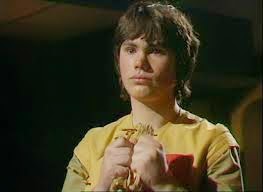
Hello Peter Davison. The achingly young actor (under 30 at the time) takes up the mantle of the Doctor for an uneven trio of years. Of course, uneven was usually the best you could get out of the John Nathan Turner years, so I guess that is an advantage. We get some new energy, a cricket-style costume and, of course, a piece of celery on his lapel. Strap in, this is going to get bumpy.

Castrovalva

There are a number of sins here, though you can’t lay them all at the feet of scriptwriter Christopher H. Bidmead. The writer – who had just left his post as the show’s script editor – offers up an interesting, science-and-math based concept that has some rich potential. There are a couple of flaws. The main one is that the Doctor is on the sidelines far too long (this is an issue in a number of regeneration episodes – we want to see the character in his new guise from the first moments, not sleeping his way through most of Christmas), spending a good chunk of the episodes locked in a tiny cabinet as the troubled regeneration takes hold. The other has to do with the costume. Davison was saddled with a daft look for three years that had a nice Edwardian cricketer look, but featured a clash of colors that was off putting and was topped with a stalk of celery that was quite a comedown from Tom Baker’s iconic scarf. This was also a sign of costume disasters still to come.

Four to Doomsday

Costumes weren’t the problem in this slog of an episode. We get another interesting idea shortchanged by a lack of interesting design, uninterested directing and a glacial pace (get used to those problems; they are legion in the Davison era). A spaceship that has visited the Earth multiple times through history is on its way back with nefarious plans of course. The Doctor and his cadre have to stop it all and do so.. with the aid of embarrassing cultural dances? Oh yeah.

Kinda

Here’s the highlight of the season, as we get a script that pushes into the nature of legends and the mind – and gives Janet Fielding a rare chance to be more than the “loudmouth companion with an Australian accent.” Tegan gets “infected” by the physic presence of the Mara, a representation of all the dark thoughts of the former inhabitants of the planet. Scriptwriter Christopher Bailey crafted a measured piece of exploratory science fiction that was, in turn, nicely directed by Peter Grimwade (a better director that scripwriter, as we’ll see). Oh, and there’s a terrible giant snake, but you can’t have it all in early 1980s Doctor Who.

The Visitation

A somewhat jolly pseudo-historical has the gang fighting aliens and robots in plaguer-ridden 17th-century England. There’s an awesomely hammy performance from Michael Robins, a solid script from Eric Saward, and the revelation that the Doctor himself was responsible for the Great Fire of London (as if you didn’t expect that all along).

Black Orchid

And here’s an actual historical adventure, with no science fiction elements apart from the Doctor, crew and Tardis (the first for the show since the Highlanders all the way back in 1966. It’s a simple story, really, about a terrible family secret and murderous intent. Also, we learn that the Doctor is terrific at cricket – hitting multiple sixes and taking several wickets (and yes, my anglophilia means I understand the rules of the game) – and that Adric is mainly interested in stuffing his face than dancing. Also, Sarah Sutton gets a rare chance to do more than show that Nyssa is good at math and stuff by playing a pair of roles here.

Earthshock

Or, when Adric finally gets off our back. This has always been a troubling episode, because Adric’s death (oops, 32-year-old spoiler alert) really doesn’t have any bearing on anything. His sacrifice doesn’t ultimately mean anything except that JNT wanted to get rid of a character with a bang. The Cybermen are back and planning to destroy the Earth again. There are some nice moments with them – even if the 1980s version of the creatures wear moon boots – and good energy from beginning to end. The moments just after Adric’s death are also nicely played by the remaining trio of regulars, though that is rather undercut by the next serial.

Time-Flight


Um, it involves a Concord traveling back to ancient Earth, giant rock things, a badly disguised Master, and… oh, writing about this is just too painful. This is absolutely the nadir of the Davison years.

Next time, things look a bit up, then really down and then up again for the anniversary year.

Sunday, July 6, 2014

Doctor Who Season 18: Let the glitz begin

The John Nathan-Turner era begins with a flash, literally, as a new title sequence opens up the season. Gone is the familiar time tunnel from the past seven seasons and the recording of the theme tune that served the show for 17 years. It’s replaced by a star field, a neon-tubed logo and a new arrangement that pushes the sound soundly into the 1980s.

The burst of energy from Nathan-Turner carries on through the series. It isn’t as strong as the first part of Baker’s era, but after the terrors of season 17, even the likes of Meglos don’t seem that bad.

The Leisure Hive

We start out by the seaside – mainly to get K-9 all wet so he wouldn’t play a part in the episode (JNT hated the tin dog), before we head out to a far flung planet for a dying race who seem to spend their last days running a pleasure planet. All, of course, is not as it seems. The marks of the era are all over the show, which means there is an inconsistent tone to the whole proceedings that eventually make it less than the sum of its parts.

Meglos

So, Tom Baker turns into a cactus, there’s a massive roleplaying die controlling a world and… wait is that original companion Barbara Wright playing the overbearing, primitive priestess? Indeed, she is, making a singular reappearance (no other companion ever did this) as a different character. The story is often remembered for the giant cactus makeup that Tom Baker had to wear – and the giant die (the dodecahedron no less) that is the heart of the planet’s power.

Full Circle

Adric looms large over the early years of JNT’s tenure on the role. The oft-hated character (sort of like Doctor Who’s Wesley Crusher) joins the crew, via an intriguing story. An accident pushes the Tardis out of our universe into “E” space. While the Doctor and Romana search for a way out, they land on a planet that seems to include a crew preparing to launch their generational space ship, while all the while cautious of the creatures in the swamp. It turns out to be a bit murkier than that, as it turns out the ship-board folks are actually the evolved version of the swamp creatures. There’s some nice atmosphere along the way to help make this a solid start to the trilogy.

State of Decay

Ah, Terrance Dicks’ Space Vampires script finally comes to the screen. It feels like a relic from an earlier age, because – well, it is a relic from an earlier age. Dicks is a solid writer who provides plenty of creepy details (the spaceship fuel tanks are full of… blood!) that are taken up in the direction and design.

Warriors' Gate

I’ve seen Warriors' Gate plenty of times over the years – and I’m still exactly sure of all of the action. The script (penned by Stephen Gallagher) involves lion-like creatures who can ride the time winds, and an interrupted feast and robot knights and… Oh well, let’s just enjoy the visuals, shall we? The episode also marks the end of Romana and K-9, who rather quickly stay behind with one of the lion guys. So, Lalla Ward is done. She provided a lot of entertainment in a particularly uneven era of the show.

The Keeper of Traken

Wait, don’t trust him, Doctor, it’s the Master! Oh, wait, it actually isn’t the Master at this time. Anthony Ainely – who would carry on in the role of the Doctor’s nemesis throughout the ‘80s – plays a good man who comes to a nasty end in this episode. The episode includes plenty of to-ing and fro-ing by the cast with a story that, in the end, doesn’t completely hold our interest. We do get our first look at Nyssa, who will become another new companion very soon.

Logopolis


The final piece of the overcrowded Tardis is introduced as Australian air hostess Tegan (the always enjoyable Janet Fielding) joins the fray during a particularly bad day (she is late for her first day of work; her car breaks down; her beloved aunt in killed by the Master). Meanwhile, there’s lot of sometimes confusing math going on, centered on the titular planet and block transfer computation (no, it doesn’t make much sense, but they can alter the universe with their equations). The Master gets in the way and threatens the whole universe. As it often happens, the Doctor sacrifices himself to save the day. And he regenerates into…

Monday, June 9, 2014

Doctor Who Season 17: City of Death! and... oh dear


A confluence of influences combine to make this, if not the worst season of the classic series, than at least the most disappointing. After all, we have the iconic Tom Baker in control. Lalla Ward joins the crew as the new Romana. Douglas Adams serves as script editor and even writes two of the stories. What could go wrong?

By season’s end, just about everything. The final three completed series of the season rank among the worst in the show’s history, as bad acting, directing and design work against material that is already weak. By the end, strikes at the BBC scuttle the final serial, but more about in a bit.

Destiny of the Daleks

It gets off to an uneven start with the return of the Daleks and their mad creator, Davros. Terry Nation contributes the script (at least his name is on the title card; word is that Adams wrote quite a bit of it himself), which turns out to be his last for the show. It’s a pretty uneven ride, hurt by David Gooderson as Davros. He isn’t able to build up the same level of mad anger that made Michael Wisher’s performance so brilliant. Here, the Daleks are at war with another race of robots (humanoids, mainly memorable for their braided hair). They need the original organic factor to win. It’s up to the Doctor, Romana and a few rag-tag crash survivors to scuttle all of the plans for universal domination. Money problems are already in effect here, giving the episodes as rag tag of a vibe as the survivors.

City of Death

Here is the one saving grace of the season. We have: A terrific script by Douglas Adams; great guest turns by Julian Glover, Catherine Schell and Tom Chadbon; they went to Paris (Paris!) to film. The plot (which Adams reused a bit in his Dirk Gentry books) involves an alien split across human history by an accident at the dawn of life on Earth. A plot involving time travel, multiple copies of the Mona Lisa, and the possible end of all life on the planet twists and turns for a quartet of thrilling and funny episodes. It’s all downhill from here.

Creature from the Pit

Perhaps having spent all their money on a trip to Paris, the production apparently spent about three pounds on the monster here, which is basically an inflated blob of plastic painted green. Horrible creature aside, we also have a plot cobbled from Star Trek’s “Devil in the Dark” and some awful mugging from Tom Baker. It makes for a largely forgettable experience, except for the creature: we will never forget that as much as we want to.

Nightmare of Eden

Speaking of mugging from Tom Baker… His performance pushes beyond the envelope here, especially in the final scenes. It doesn’t help that director Alan Bromly clashed with everyone on the production and eventually was fired/quit the production, forcing Williams to step in and finish the storyline. The hard work directing doesn’t pay off, as the series is riddled with unconvincing shots and wooden performances. There are a few highlights, such as one character’s descent into drug-addicted hell, but mainly this is another one to forget.

The Horns of Nimon

Our trilogy of doom ends with another interesting idea (a recreation of the story of the Minotaur on an alien world) that is done in by one of the worst performances in Doctor Who history. Graham Crowden was an extremely talented performer with a long history on stage, film and television. He was even offered the role of the Doctor, but turned it down. Here, as the evil Soldeed, he puts on a full ham dinner. His calls of “Nimon,” as if he is trying to find his pet cat, just won’t leave your mind, no matter how hard you try.

Shada


The season finale was to feature a retired time lord, a prison planet, and a script by Douglas Adams. Only about a third of the series was completed, as continued industrial actions at the BBC left the recording schedule in tatters. It’s hard to judge what remains, as it only includes the exterior filming (including a dandy scene where the Doctor, on a bike no less, is chased by some floating sphere thing) and some studio work. Adams, again, later strip mined the story for Dirk Gentry, and the series was first compiled with the existing footage and linking narration by Tom Baker, and then made into an audio play with Paul McGann taking on the Doctor role.

Monday, May 12, 2014

Doctor Who Season 16: It's time for a quest...

While the early seasons of Doctor Who presented the stories as a continuous adventure, the various storylines weren’t connected together. One adventure would end, they’d retreat to the Tardis and then the next one would start. After a while, even that slight tissue was dropped.

For his second season, Graham Williams decided to craft the first fully connected season in the show’s history. He actually wanted to do the The Key to Time storyline in his first season, but there wasn’t time to assemble it in time. Season two, however, would bring the concept to life.

It ends up being an uneven season, with some terrific adventures along the way (including Douglas Adams’ first contribution to the show) and the likes of The Power of Kroll, which doesn’t have much going for it except for a giant-mega-squid-thing (coming this fall on the Syfy channel).

The Ribos Operation

We start with an adventure from an old friend, as Robert Holmes returns with a typical script, loaded with scoundrels and grifters. First off, we need to make some introductions. Solo Tom Baker is taken to meet the White Guardian, who gives him a task conveniently broken into six parts. He needs to the find the fabled Key to Time, which can return balance to the universe. He also gets a new companion, Romana, played in the first season by Mary Tamm.

In what is going to be a familiar sight during the season, Ribos is a mixture of a technologically advanced society with lots of touches of the Middle Ages tossed in. The story features low-life grifters (in other words, perfect Holmes characters) and a certain jewel that may just be… the first segment to the Key to Time.


The Pirate Planet

Or, “that episode Douglas Adams wrote.” The Hitchhiker’s Guide to the Galaxy was still bubbling up through BBC Radio when Adams got the commission, and you can see the various influences throughout in this script. There’s a touch of the Vogan’s, as the planet in question is actually a shell that travels the universe and destroying the worlds beneath it. There are ineffectual revolutionaries, even more ineffectual bad guys and plenty of jokes along the way. Tom Baker really seems to be thrilled by the material, and has an absolutely brilliant scene when the planet-killing scheme is revealed. His abject horror at the situation feels and sounds absolutely real. The special effects don’t always do the series any favors, but it certainly is one of the most ambitious series of the season – and still a lot of fun watch (even with the bad mecha-parrot flying around).

The Stones of Blood

Episodes during the Graham Williams’ years set on contemporary earth are rare (just one per season), and I tend to get this one confused with the superior Image of the Fendahl from the previous season. This does have some striking and startling bits of horror – well, as much as you can get with mobile stones (of blood, I imagine). The series takes a strange left turn at the end as we end up in a trans-dimensional prison ship officiated by a couple of overbearing and by-the-book flashing lights/police officers.

The Androids of Tara

Hey, it’s the Prisoner of Zenda – in space! Well, not exactly space, just another planet with a mix of advanced and primitive technology. There’s a bit of daring do and the cast looks like they are having plenty of fun, but the acting and effects are pretty uneven and the whole show is a bit flat.

The Power of Kroll

It’s been a few weeks since I watched this particular episode. The only things that have stuck with me through that time is: just how impressively and unbelievably massive the Kroll squid thing (also a segment, of course) is; and all the green-skinned natives chanting “Kroll! Kroll! Kroll!” over and over again. The plot is kind of like the Jon Pertwee episode The Mutants, just without the poorly deployed moral message.


The Armageddon Factor

Budgets always got squeezed at the end of classic Who seasons, and – as was typical through the later 1970s – the final serial was a six parter. The low budget hurts this space adventure, though it isn’t without its delights. The main one is Lalla Ward, who plays a princess here before taking on the role of Romana in the following season. The plot involves warring planets and supercomputers – a bit like the original Star Trek episode “A Taste of Armageddon” – that finally gets us to the final segment. The Black Guardian, hinted at before, makes an appearance, but the Doctor susses him out and all is saved, though the Key to the Time is dispersed, making the past 26 episodes a bit pointless. Still, there was some fun along the way.


Fun is not a word often used when discussing season 17, as we will find out next time.

Monday, May 5, 2014

Doctor Who Season 15: Enter the tin dog

A new season marked a new era, as producer Graham Williams took over. His initial plan – a season-long series of interconnected stories – would have to wait until his second season. In the meantime, we get a mix of good and bad – sometimes in the same series – as the tight budget continues to constrain the show. It didn’t help that Star Wars premiered a few months before the season started in September 1977, meaning that the visual rules for science fiction had just been broken wide open.

The Horror of Fang Rock

Philip Hinchcliffe may be gone, but season 15 opens with a series that is very much in tune with his era. This is straight-up horror, involving an alien presence and an isolated light house. Through the four episodes (in one of Terrance Dicks’ best scripts for the show) they actually kill off two different groups of people: the light keepers and the survivors of a shipwreck. Still, the alien invasion is prevented and an explosion at the end changes Leela’s eye color. (Louise Jamison had to wear colored contact lenses in her first season; one of the deals she made to come back was to ditch them.)

The Invisible Enemy

And here comes K-9. There is a lot going on in these four parts, but the story still feels padded out. Once the Invisible Enemy of the title becomes, well, visible, the story loses its way, leading to a meandering fourth episode. The earlier episodes, however, are plenty of fun. We get some bona-fide scares early on, as a relief crew is infected by some kind of super-intelligent space virus. Later on, contact gets made with the Doctor. To get the main virus out of his head, he and Leela are cloned and sent into the brain. Along with this Fantastic Voyage-style adventure with get K-9, the robot dog that quickly became a fan favorite – and who cause multiple headaches in the future in recording. Also, once the virus gets big for episode four, the series loses all momentum. Dodgy monsters would be a hallmark of the upcoming seasons.

Image of the Fendahl

Like here. If you hadn’t seen the opening credits, you might think you had arrived at the wrong program for the first 10 minutes here. We have an isolated group of scientists working on time experiments. They have also awakened an ancient evil, as like in The Daemons or Quatermass and the Pit. The Doctor gets in the way, but not before a death cult (yes!) threatens all of humanity. The interplay between the scientists is good, as are the performances from Tom Baker and Louise Jamison. The trouble comes near the end when the Fendhahl makes an appearance. It is absolute rubbish. It’s hard not to laugh every time it is on screen, and that robs the end of the story of any of its major payoff.

The Sun Makers

The satire at the heart of this Robert Holmes’ serial (his first after his term as script editor) isn’t particularly deft. It’s a spoof on taxation, where the repressed minions of humanity’s last outpost on Pluto are squeezed worse than poor George Harrison in “Taxman.” Actually, it is a bit more complex than that, as these are actually corporate taxes charged to the people by a ruling corporation.

Beyond that, there are some playful moments scattered throughout, especially for Leela (this is Louise Jameson’s favorite episode) and some epically bad sets and special effects. This includes a futuristic car that travels about as quick as the “Enforcers” from the MST3K classic, Space Mutiny.

Underworld

My recollection – and I probably hadn’t seen this in 25 years at least – of Underworld was a lot of running around on unconvincing CSO. The reality? Pretty much that, though now I can see the interesting parallels drawn between this story and Jason and the Argonauts. (Yay! Studying the classics can be helpful.) Here, the Doctor teams up with a group of explorers with names quite close to Jason and crew, who are looking for a legendary lost ship that contains their race’s biological code. With that, they hope to end a quest that has gone on for 100,000 years and start a new world.

They find the ship, but it has been buried beneath a layer of space matter. They also find an oppressed people to free and plenty of time to wander the BBC corridors, rendered both in a couple of white panels and the aforementioned green-screen sequences that didn’t fool me as a youngster and come off even worse today.

The Invasion of Time

And we end the season with a six-parter that is really a four-parter with a two-parter stuck on the end. We also go back to Gallifrey for no good reason. No, scratch that, there was a good reason but it had nothing to do with the story. Another script fell through, leaving the crew in the familiar lurch. A new story was improvised by script editor Anthony Read and producer Williams, and a low, low budget was paramount. The costumes from The Deadly Invasion were still in storage, as were the Gallifrey designs from before. Voila, instant story.

There are a few moments of interest – The Doctor acts nasty for a bit; the invaders turn out to be the Sontarans – and plenty of padding. The final two episodes feature long, long stretches of exploration through the Tardis (which appears to have a power station in it) that stretch usual corridor jaunts to the breaking point. It also provides a rather unsatisfying end for Leela, as the warrior woman goes out not in a blaze of glory but in the arms of a Citadel guard that she has shared no romantic times with at all. (The producers were unsure if Jameson would go ahead with her plans to leave; she did.)


Up next, we get a whole season dedicated to the search of the six parts of the Key to Time, complete with a new companion and a bad guy with a crow on his head.

Monday, April 21, 2014

Doctor Who Season 14: Goodbye, Sarah Jane, hello Leela

In his last season as producer, Philip Hinchcliffe continued to merge different influences into the narrative of Doctor Who. The ramped-up horror finally came home to bite him, however, as Hinchcliffe was moved off the show at season’s end. That wasn’t the only major change to be seen in this collection of episodes, which prove to be the apex of the classic series.

The Masque of Mandragora

It’s off to 15th century Italy for a romp with new scientific thinking coming face to face with superstition and an ancient Roman death cult. The Mandragora of the title is an energy being thing that hitches a ride on the Tardis and wrecks havoc when it arrives deep in Earth’s history. The Doctor teams up with a bright young lord to fight off a conniving uncle and the aforementioned death cult (Ok, I just like writing “death cult,” it’s fun).

The Hand of Fear

We say goodbye to one of the most beloved companions here, as Sarah Jane Smith ends her adventures with the classic series (apart from appearing in the 20th anniversary special, and the one-off  K-9 and Company, which we’ll cover in the future). She gets a cracking good adventure as a send off as well. The hand of the title is a remaining piece of Eldrad, an evil despot whose execution didn’t quite go to plan. As a stone-based creature, the hand survived for millennia before being found in a quarry by Sarah (for once, the BBC quarry actually was a quarry). The story falls apart near the end, but the early episodes really sparkle, and it gave Elisabeth Sladen a late-innings catch phrase: “Eldrad Must Live!’

Her farewell is also nicely done. Unlike poor Jo Grant, she doesn’t get married off. Instead, she is forced out of the Tardis. One likes to think the character would have spent a lifetime aboard the ship, having adventure after adventure. We’ll come back to that as well later on, with a look at her spin-off show, The Sarah Jane Adventures.

The Deadly Assassin

First off, we go to Gallifrey for a solo adventure for the Doctor. The story isn’t bad – there is plenty of political intrigue, a trip into the “Matrix,” which ends up being a lot like the one in the big-budget movies, only without the budget. We also have the return of the Master, who appears as a decayed creature on the edge of death. The plot turns on his desire to increase his life span beyond the allotted 12 Time Lord regenerations.

That little detail ended up causing quite a bit of hand-wringing when it came to the new show. The Doctor, you see, was running out of regenerations. What would the show do when it reached Doctor number 13? In the end, they came up with a clever solution that will keep the issue off the books for at least another 50 years.

The Face of Evil

The Doctor on his own doesn’t work very well, so thankfully we get a new companion. It was one that proved not only to be popular with the target youth audience, but the dads out there as well. Leela, the savage who often wore a small and tight leather outfit, is now on the scene.

The plot isn’t bad either, as we get a look at a time when the Doctor made a mistake and had to pay the price. You see, a space ship crashed on the planet. The Doctor, trying to help, thought he fixed the main computer. Instead, he gave it a bad case of split personality. The descendants split into two groups: the savage Sevateem and their enemies, the Tesh. The Doctor has to set things right, defeating some dodgy monsters and figments of himself along the way.

The Robots of Death

Chris Boucher – who also wrote The Face of Evil – returns with an Agatha-Christie-style murder mystery where an isolated gathering of folks get offed one by one. The script is good and the acting is pretty solid throughout. The real star, however, is the work done by the design team, who give the whole proceedings a striking, art deco inspired vibe.


The Talons of Weng-Chiang

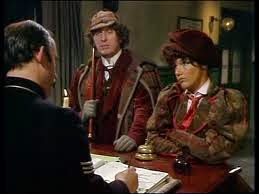
Philip Hinchcliffe goes out with a bang, producing one of the best – though also controversial – serials in the series’ long history. Robert Holmes crafts a delicious mix of 19th century storytelling tropes, from Sherlock Holmes to Pygmalion to The Phantom of the Opera for the story. It involves a mad scientist as usual, though this one comes from the future and has disguised himself as a Chinese God, Weng-Chiang. His acolyte is Li H’Sen Chang, who works as a stage magician/ventriloquist while finding young victims for his master to “eat” to stay alive. The Doctor gets ensnared with all of this, along with a couple of Victorian gents, theater owner Jago (Christopher Benjamin) and coroner Professor Litefoot (Trevor Baxter). The characters are delightful – so much so that the characters eventually were spun off into a Big Finish series of audio adventures. We also get Leela out of her skins and into a Victorian dress, though her table manners are not the best.


The story is an absolutely fun ride. There are two points of controversy about it. The first is the yellow-face casting for Li H’Sen Chang. John Bennett is fine in the role, especially when you realize that a lot of the stereotypical behavior of the character is an act. That’s been the second bone of contention about the show, Li H’Sen Chang is playing to the prejudices of the English folks that he meets. Still, the casting is a relic of a past age. Mind you, the BBC also broadcast a show called the Black and White Minstrel Show during this era, which is exactly what it sounds like: white actors performing in blackface for the audience’s entertainment.

Wednesday, April 2, 2014

Doctor Who Season 13: Nothing unlucky here

Doctor Who’s “gothic” era gets into full swing here, as Philip Hinchcliffe and Robert Holmes begin to produce stories that they’ve commissioned and ushered through the process. It results in series that are often dark and morbid, but also carry a light touch – mainly through Tom Baker’s increasingly strong performances and his easy chemistry with Elisabeth Sladen. It's also probably the single best season of the classic series.

The Terror of the Zygons

First off, we give U.N.I.T. a send off with an adventure set in Scotland – near Loch Ness even – and involving the much-loved-but-rarely-seen shape-shifting Zygons. They want to take over the world – don’t they always? – and are putting their final plans into motion when U.N.I.T. and the Doctor get involved. There are plenty of Scottish touches throughout; just about the first word we here is “haggis.” There is also a piper playing loudly in one scene, a dour Duke and a strong Gaelic-games champion. The BBC quarry puts in an appearance, though at least it is actually supposed to be a quarry this time, not an alien planet. It’s also time for goodbyes: Ian Marter leaves the Tardis crew, only coming back for a single series later in the season. That series, The Android Invasion, will also be it for John Levene as Benton. Nicholas Courtney’s Brigadier will eventually come back twice in the 1980s, but he essentially hangs up his swagger stick. The Earth-bound adventures that so defined the first half of the 1970s for the program are over.

The Planet of Evil

In contrast, the next story heads out to the farthest reaches of the known universe nearly 30,000 years into the future. While the previous story had an Invasion of the Body Snatchers vibe, this time around it’s a mash-up of Doctor Jekyll and Mr. Hyde with Forbidden Planet. The titular planet is at the border between matter and antimatter. A scientist thinks that the antimatter will solve their society’s energy problems, but the Doctor knows better.

Our heroes need to fight the scientist (transforming into a sort of anti-man), a negative energy creature and the planet itself to sort things out and prevent a second big bang. The story hums along at a decent pace – enough to hide plot holes and the sometimes dodgy spaceship set. The planet set, however, is well realized. That’s aided by a clever use of “location” filming. Instead of putting the planet on the BBC quarry, the crew went to Ealing Studios, built the jungle set there and filmed it. Ealing allowed for plenty of more atmosphere than the BBC, as did putting the material down on film instead of videotape. It makes for one of the most distinctive looking shows of the era.

Pyramids of Mars

An episode of this serial was likely the first episode of the show I ever saw – I certainly have a memory of watching a few episodes around 1977 when it was broadcast on one of the local channels (KSTP 5 I believe) and the voice over introduction sticks in my mind. If it was, then the last 36 years or so have been largely downhill, because I’d consider this to be the show at its height. Mysterious evil? Check. Ancient myths that have a scientific background? Check. Mummy robots? Check. Cast of Edwardian gentlemen who get offed by the aforementioned robots and science-based myths? Check.

The plot involves an attempt by Sutek – not an Egyptian god but a immensely powerful alien – to free himself from his Earthbound prison, using the body of an unwitting archeologist and on a (thankfully for the budget) nearly deserted English estate. Robert Holmes uses mummy movies as a foundation here, building from there into something is at turns horrifying (the end of one character, killed by the animated corpse of his beloved brother, is particularly frightening), grotesque and thoroughly entertaining. It’s aided by good performances throughout, including the golden throat of Gabriel Woolf, who brings Sutek to life just through his voice. It’s one of two performances by Woolf in the TV version of Doctor Who – in the new series, he plays The Beast, an ancient all-powerful evil imprisoned… hey!

The Android Invasion

Following Pyramids of Mars wouldn’t be easy for any serial, and while there are good elements here – the first episode is particularly creepy – this UNIT postscript doesn’t hold up that well. The Doctor and Sarah land on Earth. At least, they think it is Earth, but the natives are acting oddly, all of the money is brand new and the calendar just has the same day over and over again. The title lets us know what is really going on, and there are plenty of duplicates running around from here on out. Barry Letts returns to direct and does his typical solid job, but he is done in by a script that lays everything out far too clearly early on and alien costumes that, while being somewhat effect, force the performers to overact just to get the lines out. Hammy performances can work – but not when they are on screen, talking over the plot, for long stretches.

This also marks the last performances of John Levene and Ian Marter, who return as Benton and Harry Sullivan. Marter went on to novelize a number of Doctor Who adventures and even continued his character’s story in Harry Sullivan’s War before dying far too young in 1986. Levene continues on in Doctor Who fandom (I met him in the late 1980s at a convention that also included Sylverster McCoy, George Takei and Walter Koenig; no the Who and Trek fans didn’t have a rumble at the con).

The Brain of Morbius

Hello, Dr. Frankenstein! Sometimes the influences of this era of Doctor Who sit pretty close to the surface. Here, we have a mad scientist piecing together bits and pieces of crash-landed aliens to make a body for, as the title suggests, a disembodied brain of a vile Time Lord. Meanwhile, across the rocky interior set, the Sisterhood of Karn – who are responsible for causing all the ships to crash – are on their last legs, as the elixir they rely is drying up.

The Doctor gets sent along by the Time Lords, likely to take care of the second crisis, but in typical fashion gets ensnared in both. There are a number of horror-film tropes that help each cliff hanger immensely, along with some particularly morbid humor from Robert Holmes, including the brain plopping on the floor in one scene. (Yes, they got letters about that.)

The story’s genesis is an intriguing one, as Terrance Dicks had been commissioned and wrote a similar piece, but one where the body is being built by a robot without an aesthetic sense (which would explain the hodgepodge nature). Rewrites were needed and Dicks was on holiday, so Holmes completely revamped the script to the point that the original writer didn’t recognize it and asked that his name be taken off. He asked that it be given a “bland” pen name, so it appeared on the screen as being written by “Robin Bland” (Holmes’ humor striking again).

The show is plenty of fun, owing a lot to an absolutely unhinged performance from Philip Madoc as scientist Solon, whose head-based obsession reaches new heights when coming face to face with Tom Baker’s curly-haired character.

The Seeds of Doom

I do know that I saw an episode of this during the 1970s broadcasts on Channel 5 – because the grinder turning poor folks into compost really freaked me out. This a glorious end to the season, with a six parter that doesn’t sag, a monster that isn’t really the villain, and a villain that – even in the realm of this show – is particularly mad.

The seeds in question are alien pods found buried in the Antarctic. The first two episodes find the Doctor and Sarah at the lonely outpost, doing the whole Thing thing as they try to stop a scientist who has been transformed by the pod into a vegetable creature bent on destruction. They aren’t helped by thug Scorby and scientist Keller, who have been sent by their boss – the aforementioned unhinged Harrison Chase – to get the pod at any cost. The first Krynoid is destroyed, as is everyone at the base.

The first is gone, but there is a second. That helps to fuel the second part of the story, as we return to England with a second pod (hence, the “seeds” part of the title). Our heroes spend most of their time trapped in Chase’s mansion, trying to not get ground up in the masher or absorbed by the newly hatched Krynoid, who has possessed poor Keller.

Robert Banks Stewart builds on his Terror of the Zygons success with another strong script. Tony Beckley dives into Chase with gusto, walking the ham tightrope expertly throughout. There are fine character pieces throughout and Baker and Sladen are fine as always.


So the lucky season 13 is in the books. Season 14, as typical with the program, is one of change, especially as the dark nature of the past two seasons comes home to roost.